
Safe endoscope processing doesn’t stop once point-of-treatment cleaning is wrapped up in the procedure room. The journey between the GI suite, the reprocessing room, storage areas, and back to procedure again is full of hidden hazards: delicate fiber optics, fluid ingress, and serious cross-contamination risks. Every endoscope transfer step puts high-value scopes at risk of physical damage or protocol breakdowns that can derail your unit’s turnover times.
Dropping a scope, coiling it too tightly, or mixing up clean and bioburden-laden equipment isn’t just an operational hindrance. It directly impacts patient safety and infection control compliance. Safe, standardized transport keeps your workflow running smoothly while safeguarding your team and your patients.
Effective endoscope transport hits three non-negotiables:
- Protect delicate optics & internal channels: Prevent costly shock damage, sharp bends, and fluid compromise.
- Contain bioburden & prevent cross-contamination: Seal off pathogens during transit from procedure room to decontamination.
- Streamline GI unit workflow: Eliminate confusion with clear visual indicators for clean vs. soiled scopes to keep room turnarounds fast.
When your team sticks to consistent endoscope transport best practices, your healthcare facility does more than protect scopes valued in the tens of thousands of dollars. You also safeguard sterile processes, improve workflow, maintain strict compliance standards, and ultimately, provide better patient care.
Protect Your Scopes: Prevent Costly Damage During Every Trip
Transport practices should protect internal and external components just as carefully as handling during reprocessing.
Transport containers need enough room for scopes to rest in large loops rather than being compressed into a small container. Scopes should also be protected from shifting, banging against hard surfaces, being stacked beneath other equipment, or hanging outside a protected container.
Accessories can travel with the endoscope, but must be kept in separate pouches or containers to prevent them from scratching or damaging the scope.
The transport cart also plays an important role in protecting scopes during movement. Stable trays, adequate capacity, durable bumpers, and medical-grade casters can all reduce unnecessary jostling during routine transport, keeping movement smooth and safe.
Even relatively minor handling problems can become expensive when they result in scope repair or unexpected downtime. Flexible scopes are exceptionally delicate. One bumped insertion tube or over-coiled umbilical cable can lead to fluid ingress and a five-figure repair bill. Understanding the hidden financial impact of scope damage is key to reducing avoidable repair costs.
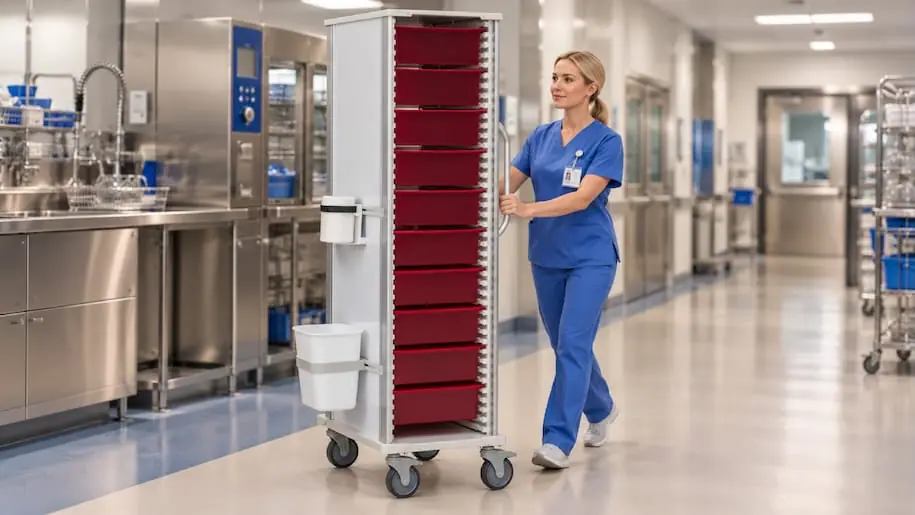
To mitigate these handling risks, Innerspace’s Scope Transport Cart uses slide-out trays within a mobile cart equipped with bumpers and 5-inch medical-grade casters. These features help protect scopes while allowing staff to move them safely and efficiently through the facility.
Infection Control and Bioburden Containment: Keep Pathogens Sealed Tight
Scope transport isn’t a single routine. How you handle a scope depends entirely on where it is in its reprocessing journey:
Clean and Contaminated Scopes Have Different Transport Needs
Endoscopy transport follows two distinct, non-overlapping pathways:
- Used Scope: Procedure Room –> Decontamination: Point-of-use treatment begins immediately according to the manufacturer’s IFU. From there, transport focuses strictly on containing bioburden and preventing cross-contamination.
- Processed Scope: Reprocessing/Storage –> Procedure Area: The goal changes from containing contamination to preventing recontamination before the next procedure.
Recognizing these different transport needs helps medical facilities maintain clear separation between contaminated and processed scopes throughout the workflow.
Make Clean vs. Soiled Status Obvious
Dedicated containers, color-coded tags, and clear labeling eliminate guessing games, ensuring decontamination techs immediately know what requires enzymatic processing before bioburden dries. For example, Innerspace’s Ventaire scope transport system uses distinct green and red trays paired with clear and red disposable liner bags to provide an instant visual indicator of reprocessing status.
Contain Contaminated Scopes
Enclosed, rigid transport containers keep bioburden secure during transit through public hallways, protecting staff and visitors from aerosolized or contact hazards. Containers should be leakproof, puncture resistant, and appropriately identified as contaminated or biohazardous per ANSI/AAMI ST91.
A clean/dirty status indicator shows cart status at a glance, helping teams work faster while supporting compliance with OSHA and ANSI/AAMI ST91 standards.
Per HICPAC Essential Elements recommendations, point-of-use treated scopes should remain damp according to applicable IFUs rather than being submerged during transport. You can verify compliance by using HICPAC’s competency verification tool from the CDC.
Protect Processed Scopes
Once reprocessed, handling practices should prevent recontamination and protect the scope until the next use. Avoid unnecessary opening, handling, or transfers between multiple containers.
Staff should perform hand hygiene and use clean gloves when handling processed scopes. When scopes need to be transported after reprocessing, they should remain protected in a clean, closed container that clearly identifies them as ready for use. Doing so preserves high-level disinfection until the next procedure.
Even when reprocessing itself is performed correctly, scopes remain vulnerable to contamination as they move between departments. Strong transport protocols are essential for bridging the gap between reprocessing and procedure rooms.
Design Scope Transport Around the Procedural Workflow
There isn’t one ideal transport setup for every facility. Before selecting or configuring endoscope carts and storage, map out how scopes actually move through the department.
How far are the scopes traveling? Do the carts need to move through narrow corridors, elevators, or shared clinical areas? How many scopes typically need to be transported at once? Do cart capacity and maneuverability fit the actual route?
These practical considerations can help nurse managers and GI techs choose transport equipment that works with their real-world workflow rather than adding friction during busy procedure days. Instead of forcing a one-size-fits-all model, options are available in different sizes such as five- or ten-tray configurations so facilities can match cart capacity to their specific volume.
Transportation decisions can also affect how quickly rooms and scopes become available for the next patient. Optimizing workflow processes allows teams to improve turnover time without sacrificing patient safety or scope care.
Standardize the Handoff, Not Just the Container
Standardization helps reduce repeated handling and uncertainty as scopes move from one area to another.
AORN’s updated Guideline for Processing Flexible Endoscopes emphasizes clear communication during the handoff to SPD/decontam staff, confirming when point-of-use treatment occurred, whether it was initiated immediately, or when use concluded and if the scope was kept moist. When teams communicate clearly at handoff, there’s zero guesswork about scope status or bioburden risk.
Facilities with multiple procedure rooms or separate reprocessing spaces may need a more detailed system for coordinating scope movement. Standardizing transport logistics between decontamination and procedure suites can assist with this coordination.
Complete the Transport Cycle With Proper Drying and Storage
Once reprocessing is complete, scopes should transition into appropriate drying and storage rather than remaining in transport containers longer than necessary. HICPAC Essential Elements guidance says processed flexible endoscopes must be stored properly to prevent recontamination, protect against physical damage, and promote complete drying.
Prompt Drying and Safe Cabinet Handoff
Endoscope transport equipment and scope drying cabinets serve different purposes in the product’s lifecycle. Transport equipment safely moves scopes between workflow stages, while dedicated cabinets provide the appropriate environment between uses.
The handoff into cabinets must be intentional: prompt drying is critical because retained channel moisture is a breeding ground for opportunistic pathogens like Pseudomonas. Moving dried scopes straight into compliant storage ensures your team’s hard work in decontamination isn’t compromised before the next patient appointment.
Ensure your process and equipment include drying and storage solutions with a timed drying cycle and continuous venting. Systems like Innerspace’s Ventaire Endoscopy System help facilities meet current AAMI, SGNA, and AORN Multisociety Task Force endoscope drying guidelines.
Secure Storage and Automated Tracking
Effective storage involves more than simply hanging a scope in a cabinet. Staff need reliable ways to control access, verify dryness, and track inventory across the department.
Modern endoscopy management systems support these processes through:
- Automated Security: Ventaire cabinets pair automatic locking with barcode scanning or PIN code access, with doors automatically relocking two minutes after closing.
- Real-Time Visibility: With platforms like Innerspace Cloud staff can track scope inventory and drying status remotely, receive alerts when scopes expire or parts need replacement, manage users, order disposable products, and generate custom reports.
Connecting transport, drying, storage, and tracking into a single, continuous process ensures every scope remains protected, traceable, and patient-ready.
Treat Transport as Part of Scope Care
Safe scope care doesn’t end when the physician finishes the procedure or when the AER cycle completes. Every transit step in between is a crucial link in your infection prevention chain. A coordinated system of scope transport carts, drying and storage cabinets, visual identification, and tracking makes these best practices seamless and repeatable for your whole team.
Innerspace’s Ventaire line provides options across those stages rather than treating transport and storage as unrelated processes. Explore Ventaire transport and storage options or contact an Innerspace rep to discuss the right endoscopy solution for your facility.
Frequently Asked Questions
Additional Sources

Denise Porter
RN, Nursing ManagerDenise Porter is a licensed registered nurse with over 20 years of experience. Having started her nursing career in high school as a nursing assistant, she worked her way up from CNA, to LPN, and ultimately earned her RN license. She’s spent her career following her passion for patient care, while gaining valuable experience in a variety of specialized healthcare settings.