
. . . and How to Fix Them
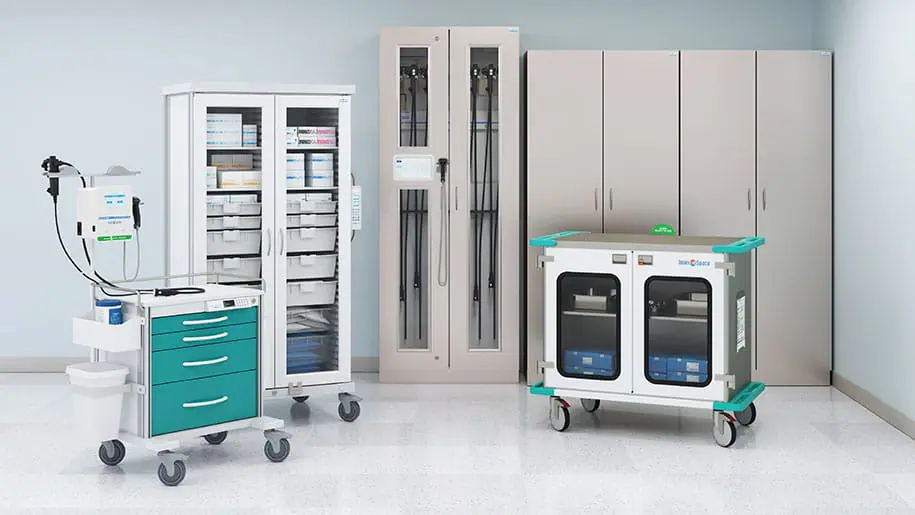
Healthcare leaders juggle many priorities when preparing for surveys. Key compliance risk areas include infection prevention, medication management, and ensuring safe, accessible care. How supplies are stored, organized, and secured plays a critical role in all three — and is increasingly under the microscope in surveys related to healthcare compliance risk.
When supplies are disorganized, unsecured, or poorly tracked, staff struggle to maintain consistent patient care, and surveyors pick up on the gaps.
This article highlights three core areas in which storage design can influence survey findings — and offers practical steps to reduce healthcare compliance risk and improve workflow.
Infection Control: Storage Design That Undermines Cleanliness
Infection control may top The Joint Commission’s (TJC) list of challenging standards, but surprisingly, storage is one of the biggest contributors to cited deficiencies.
Common survey observations:
- Sterile supplies too close to floors, ceilings, or sprinkler heads
- Open shelving that collects dust or exposes packaging
- Cluttered storage that damages packages
- Clean and dirty items intermixed
- Expired or mislabeled supplies
Root causes tend to be poor storage design: inflexible storage systems, lack of workflow alignment, and insufficient separation of zones. When the layout doesn’t support best practices, staff improvise — and that’s where noncompliance takes hold.
Solutions:
- Use enclosed cabinets, such as Innerspace Integro Closed Case Carts, to shield supplies from contamination
- Choose modular systems that preserve required clearances
- Clearly label areas for “clean” vs. “dirty” materials
- Use baskets, trays, and shelves with clear labels or color coding
Smart storage isn’t just convenient – it’s a frontline infection control measure.
Endoscope Reprocessing, Drying, and Storage: High-Risk, High-Complexity
Reprocessing scopes continues to rank high on surveyors’ concerns. Yet even after disinfection, drying and storage present additional critical vulnerabilities. According to Outpatient Surgery Magazine, frequently encountered endoscope processing issues include:
- Inadequate drying, leaving moisture that fosters microbial growth
- Ignoring IFUs (instructions for use) for cleaning or hang times
- Delays that allow biofilm to form
- Poor documentation of reprocessing steps
- Storage in cabinets lacking HEPA-filtered airflow
Residual moisture in an endoscope’s channels can lead to biofilm, increasing infection risk for patients. The Association for the Advancement of Medical Instrumentation’s (AAMI) ST91:2021 standard specifically addresses these risks by requiring proper drying and storage protocols.
Solutions:
- Use drying systems like Innerspace Ventaire Drying Cabinets that push HEPA-filtered air through scope channels
- Handle scopes vertically, per IFU requirements
- Choose cabinets equipped with tracking systems to log hang times
- Rely on enclosed, easy to clean cabinets to protect processed scopes
Effective drying and tracking is critical to patient safety and lowering healthcare compliance risk.
Quick Audit: Is Your Storage a Healthcare Compliance Risk?
Use this checklist to identify potential survey red flags in your facility.
[ ] Clearances: Are all supplies at least 18″ below sprinkler heads and 6″ above the floor?
[ ] Separation: Are “clean” and “dirty” items stored in clearly defined, separate zones?
[ ] Integrity: Are sterile packages free of dust, crowding, or visible damage?
[ ] Airflow: Are endoscopes stored in cabinets that provide continuous HEPA-filtered airflow?
[ ] Security: Are all medication and supply carts equipped with individualized digital access instead of shared keys?
[ ] Documentation: Can you produce a digital log of who accessed sensitive supplies in the last 30 days?
Data, Supply, & Medication Security: Preventing Diversion and Protecting Information
Medication management, drug diversion, and data security are top compliance concerns for both Centers for Medicare and Medicaid Services (CMS) and TJC surveyors. While electronic health record (EHR) systems deserve a surveyor’s attention, physical storage of meds and equipment also carries major risk.
Common survey findings:
- Unlocked carts or shared keys
- Unsecured controlled substances
- Keypad codes written on post-its
- No tracking of who opens supply or med carts
- IPoor chain-of-custody documentation
Inadequate locking mechanisms can fail a survey, pose a diversion risk, and open facilities to data breaches. This is a top healthcare compliance risk in which technology plays a preventative role.
Solutions:
- Use digital locks, such as the Innerspace InterConnect (or InterConnect Plus) system
- Automate locking for high risk carts and controlled substance zones
- Track access through digital logs to provide an auditable record
- Secure printed PHI in dedicated cabinets
- Design workflows so that critical carts stay in secure zones (e.g., near nurse stations)
Proactive, automated security helps reduce diversion and supports survey readiness.
Takeaway
Even though storage areas often fly under the radar, they are essential to patient safety, and survey compliance. Disorganized, cluttered, or unsecured supply rooms are not just unsightly; they’re a real healthcare compliance risk.
By leveraging smart, configurable carts and cabinets—combined with secured access and digital tracking—you can reduce your risk and improve compliance. Innerspace designs storage solutions tailored to healthcare environments so you can be confident that your facility is survey-ready, efficient, and safe.
FAQs
Sources

Cindy Blye
Content WriterCindy Blye, BSN, RN, CCM is a Registered Nurse and Certified Case Manager. She is an Alumni of West Virginia University School of Nursing (BSN), and a member of the Association of Health Care Journalists and The Authors Guild.