

In a busy hospital, the distance between the Sterile Processing Department (SPD) and the Operating Room (OR) is about more than just a long hallway. It’s measured in those stressful minutes when a patient is waiting and every second counts. We’ve all been there: a surgical nurse reaches for a tray, only to find a missing tool or a hole in a wrap.
That “emergency” usually isn’t because one person forgot something. It’s actually the result of a system that is stretched too thin. To really fix these delays, we have to look past blaming individuals and focus on the sterile processing department workflow to see where the real pressure is building.
Spotting the “Sticking Points” in the Sterile Processing Department Workflow
When the SPD workflow breaks down, it’s rarely because the team isn’t trying hard enough. Usually, it’s because they don’t have enough space or the right tools for the job. In a fast-paced hospital, small “sticking points” in the layout can quickly turn into major backups. Here are some examples:
The Backup in Decontamination
When a wave of used instrument sets arrives all at once, the cleaning area quickly becomes a bottleneck. If the sterile processing department workflow isn’t designed as a “straight line” from dirty to clean, the floor becomes congested with equipment moving in opposite directions. This lack of flow forces the team to spend more time maneuvering and wrestling with heavy carts just to clear a path, instead of focusing on the critical task of cleaning instruments.
Using Closed Case Carts helps solve this because they are built to be washed inside and out—even the stainless steel casters—so they can get back into the rotation faster. Plus, each cart has a “clean/dirty” indicator on the side. This simple tool lets the team see the status of a cart instantly, which cuts out the guesswork and keeps the SPD workflow moving safely.
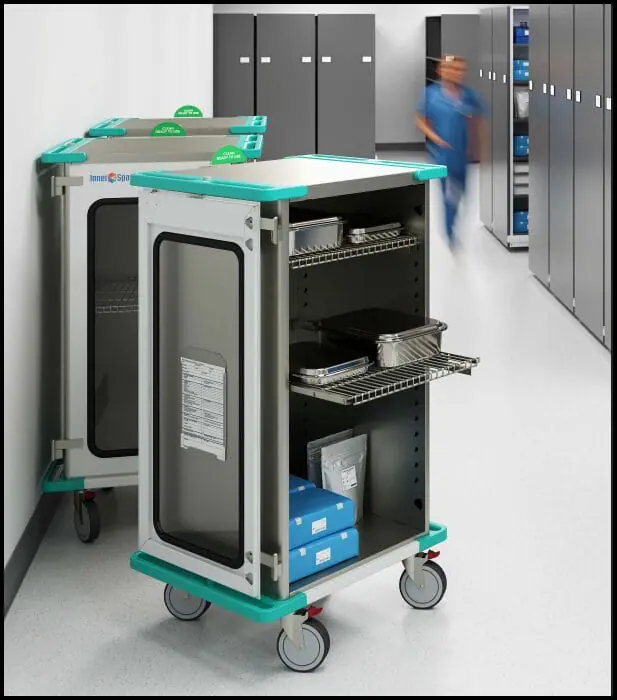
Product Spotlight: The Integro Closed Case Cart
These carts are built for the reality of a busy shift. They feature cool-to-touch polymer handles that eliminate the post-sterilization wait, getting instruments back into the workflow faster.
Inside, adjustable roll-out shelves allow for ergonomic loading of heavy orthopedic sets, preventing strain and cart overload. Fully corrosion- resistant and easy to clean, you can run them through the cart washer over and over without worry. They are the ultimate tool for a safer, faster sterile processing department workflow.
Learn More about Integro Closed Case Carts
The Hunt for Missing Parts
Putting instrument sets back together is the hardest part of the SPD workflow. When a tech has to stop what they’re doing to go find a replacement instrument, it ruins their rhythm and slows everything down. To help the team stay focused, keep every part in a clear, easy-to-reach spot.
High-density storage, like Evolve Storage Cabinets, placed right at the workstation, are a great solution. These systems allow for highly visible access to inventory, ensuring technicians spend less time searching and more time assembling. For open storage needs outside of cabinetry, look into solutions like Quick Rack and Quick Wire to keep things organized and ensure a smooth workflow.
Temperature-Related Delays
When you’re looking to boost productivity, small equipment features actually make a huge difference. For instance, finding case carts with high-quality polymer cooling handles provides a “cool-to-touch” experience. This keeps staff safer and directly increases productivity time because they don’t have to wait for the carts to cool down after they are sterilized.
Orthopedic Overload and Technician Safety
Handling larger orthopedic cases is a significant sticking point. Heavy, awkward trays are a primary source of workplace strain, and injuries take time, too. But beyond safety, the physical act of loading a poorly configured cart is a major time-sink.
By using case carts with adjustable roll-out shelves and adjustable heights, you can prevent potential cart overload and make the loading process much faster. These shelves eliminate the need for awkward reaching or “wrestling” to get heavy sets positioned correctly or to fit them in at all. Better ergonomics doesn’t just keep the team healthy; it keeps the sterile processing department workflow from getting bogged down. When you aren’t dealing with physical exhaustion or a short-staffed shift due to injuries, everything just stays on track.
The Human Side of the “Ripple Effect”
When the SPD workflow hits a snag, everyone feels it. A 20-minute delay in the basement can turn into a 45-minute delay for a surgery. This puts a huge burden on the OR nurses and anesthesia teams, leading to late shifts and burnout.
But we also have to think about the SPD team. They often take the heat for delays, even when they are working as hard as they can within a broken system. Real success isn’t about telling people to work faster—it’s about giving them a setup that lets them work with confidence and pride. Because at the end of the day, a healthy team is a fast team!
Finding a Better Flow
A calm, efficient OR starts with a strong SPD. When we stop looking for someone to blame and start looking at how the room is designed, we can find real solutions.
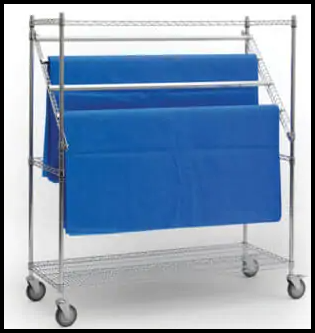
Product Spotlight: The Mobile Sterile Wrap Unit
The bottleneck doesn’t just happen at the washer; it happens at the wrap station. The InnerSpace Mobile Sterile Wrap Unit is designed to eliminate the ‘treasure hunt’ for the right size wrap. By keeping various sizes indexed and wrinkle-free on a mobile frame, technicians can move from assembly to sterilization without the physical friction of digging through cluttered bins.
By choosing better tools and a layout that is easy to use, hospitals can improve the sterile processing department workflow and stop the “emergency” before it starts. For more tips on how to keep your department running at its best, the Healthcare Sterile Processing Association (HSPA) is a great place to find more resources and support.
Stop wrestling with a broken workflow and start moving in a straight line. Contact an InnerSpace rep to discuss layout solutions and pricing, or request a quote to see how our full suite of products can clear your department’s bottlenecks.
Frequently Asked Questions

Denise Porter
RN, Nursing ManagerDenise Porter is a licensed registered nurse with over 20 years of experience. Having started her nursing career in high school as a nursing assistant, she worked her way up from CNA, to LPN, and ultimately earned her RN license. She’s spent her career following her passion for patient care, while gaining valuable experience in a variety of specialized healthcare settings.