
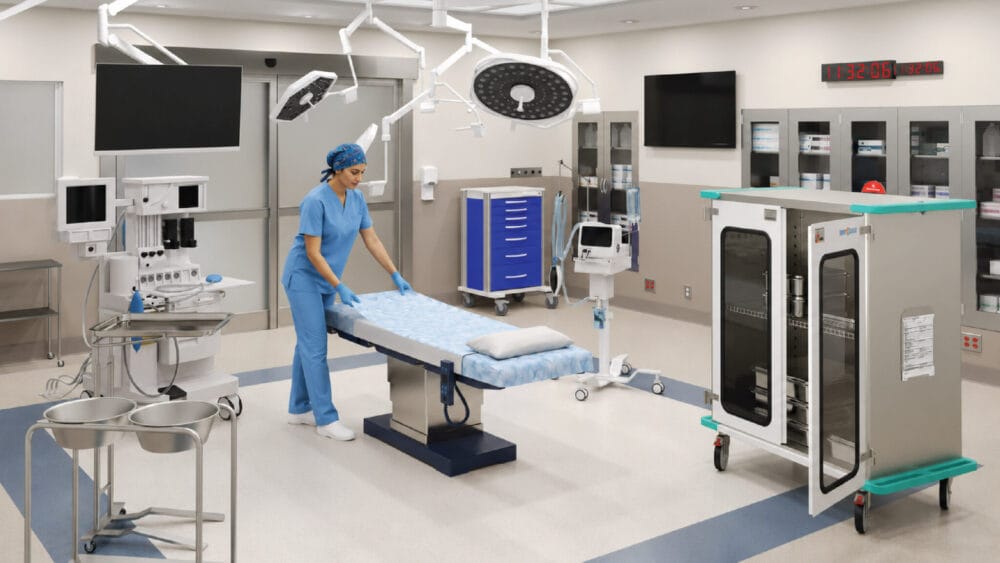
As nurses, we are conditioned to think about infection prevention the second we walk through the hospital doors. We scrub, we gown, we track every single centimeter of the sterile field in the operating room (OR) like a hawk. But let’s look a little closer at infection prevention: what happens to those perfectly sterilized instrument trays before they get to us? And what happens to the dirty ones after the case is done?
Hospitals invest massive amounts of money into state of the art OR air filtration systems and advanced technology for the Sterile Processing Department (SPD). Yet in the critical transition space where the journey through public corridors, elevators, and holding areas are, there remains a major, vulnerable blind spot. If we want to safeguard patient outcomes and stay ahead of rising regulatory pressures, we have to start viewing our transport equipment as an active part of the infection prevention ecosystem. It’s time to talk about infection prevention in hospitals and why the way we move our gear matters just as much as how we clean it.
Environmental Exposure: The Vulnerability of Transport
Think about the path from the SPD to the OR. It isn’t a pristine, isolated tunnel. It’s a high-traffic highway filled with airborne contaminants, dust, physical bumps, and everyday germs naturally carried by foot traffic.
When hospitals rely on traditional open wire carts or poorly covered racks, they are playing a risky game. A single micropuncture or tiny tear in a wrapped tray, caused by a stray corner or environmental settling during transit, can instantly ruin sterility. Suddenly, you have a “compromised on arrival” situation where a flawless tray is contaminated before it ever touches the sterile field. We need to shift our mindset from simply “moving supplies” to actively defending the chain of sterility every single meter of the way.
Mapping the Case Cart Journey: From SPD to OR and Back
Let’s trace the typical day in the life of hospital case carts to see where the gaps hide:
Phase 1: The Clean Transit and Sterile Handoff to the OR
The surgical case cart journey begins in the Sterile Processing Department, when the cart rolls out into public corridors and elevators. Utilizing a fully enclosed cart during this clean phase keeps the elements out. Once you arrive, built-in clean/dirty indicators serve as a vital visual checkpoint, allowing teams to confidently verify package integrity right up until the final handoff.
Phase 2: The Post-Procedure Biohazard Lockdown
Infection control doesn’t stop when the patient goes to PACU. The moment a procedure ends, the workflow reverses right at the point of use. The danger zone picks right back up the moment you leave the sub-sterile room to wheel contaminated instruments back through those same public hallways. Loading everything into a closed case cart instantly satisfies ANSI/AAMI ST79’s containment mandates and OSHA’s bloodborne pathogen requirements. Closed carts lock the biohazards away behind a physical barrier, keeping staff, visitors, and patients safe from accidental exposure during the trip back to the SPD.
Phase 3: Cross-Facility Logistics
For facilities where carts have to travel outside, like moving between separate campus buildings or riding in a transport vehicle, the rules get even tighter. Newer guidance in AAMI ST79 addresses external transport of medical devices with strict security protocols, requiring latched mechanisms, tamper evident seals, and precise tracking labels that spell out exactly where the cart came from, where it’s going, and its current processing status.
A Quick Reference Comparison Chart
| Transport Vector | Open Wire Carts / Racks | Innerspace Closed Case Carts |
|---|---|---|
| Environmental Shielding | None. Trays are exposed to dust, hallway fluid splashes, and airborne pathogens. | Total Isolation. Acts as a rugged physical barrier against high-traffic hospital contaminants. |
| Physical Tray Protection | Low. Wrap punctures and tears happen easily from external snags. | High. Solid-bottom shelves and fully enclosed walls eliminate transit tearing. |
| Biohazard Containment | Fails Mandates. Cross-contaminates public hallways and elevators post-procedure. | Lockdown ready. Instantly seals biohazards to meet OSHA and AAMI ST79 standards. |
| Washability & Longevity | Porous covers or cheap metals degrade under harsh hospital chemicals. | Built with 300-series stainless steel to survive high-temp automated cart washers. |
Inside the Modern Closed Case Cart: Engineering Meets Compliance
So, what does a truly compliant cart look like? It’s less about fancy tech and more about smart engineering controls that solve our everyday clinical headache without making the sterile processing department workflow a nightmare.
- True Enclosure: Fully enclosed transport systems act as a rugged physical barrier against the hospital environment. Following ANSI/AAMI ST79 (Section 6.4), these systems feature solid bottom shelves and secure doors to keep clean items safe on the way in, and the dirty items strictly contained on the way out. Premium latches can be engineered to accommodate breakaway plastic seals to further secure unopened, sterilized, or filled carts.
- Material Science Matters: Porous materials or cheap metals just don’t cut it. Modern carts utilize durable, nonporous stainless steel that can take a beating from heavy manual chemical disinfection and survive the intense heat of automated cart washers. It’s strong, easy to clean, and corrosion resistant. Combine the stainless core with safe touch handles that cool quickly after the cart is washed to add comfort as well as a boost to a time sensitive workflow.
- Visual Control: Human error often happens when we are tired or in a hurry. Clear, integrated visual indicators, such as a clean/dirty, eliminate the guesswork and prevent errors. They align perfectly with AORN’s handoff guidance, giving both the SPD and perioperative teams immediate verification of a cart’s status before it ever gets near an operating room.
- Optional Upgrades. Closed case carts aren’t just a one-size-fits-all box; they can be customized to cut down on floor errors and keep your workflow moving fast. Adding exterior card holders gives your team an at-a-glance view of the supply list without opening the doors, while upgrading to solid or wire rollout shelves means you aren’t awkwardly digging for heavy trays—preventing accidental drops and contamination. Additionally, premium high-performance bumpers do far more than just save your drywall from aggressive cart pushes; they cushion the ride so your delicate instrument trays don’t get violently rattled around, keeping wrapped sets intact and instruments right where they belong.
When you look under the hood, a modern cart is far more than just a rolling storage container. It’s a carefully engineered shield that standardizes your workflow, solves compliance issues, and actively guards the chain of sterility from the SPD all the way to the OR and back again.
Standardizing the SPD and Perioperative Workflow
SPD and perioperative teams are constantly under the gun to maintain blazing fast velocity while keeping accountability at 100%. When every department handles transport differently, mistakes happen.
Standardizing on high-quality surgical case carts removes that departmental variability. Whether a kit is rolling down to Ortho or up to Labor & Delivery, the protocol is the same. Using clear visual cues like bright biohazard indicators for dirty returns versus clean indicators for delivery creates a repeatable workflow. Not only does this keep patients safer, but it also means your team is always ready for those unannounced Joint Commission or CMS compliance audits.
Clinical Spotlight: Engineered for the Frontlines
Let’s be honest: a case cart shouldn’t just be a metal box on wheels. It needs to actively make your shift easier. This is where Innerspace Healthcare’s Closed Case Carts shine.
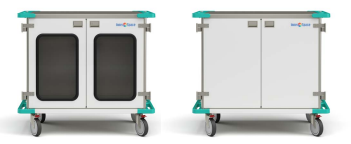
Our carts were not built to simply tick the boxes for Joint Commission compliance, they were engineered for the chaos of real hospital workflows. Built from ultra durable 300-series stainless steel, this closed case cart breezes through the automated cart washer. The optional clean-dirty indicator gets set to ‘clean’, giving the team an immediate visual cue that prevents cross-contamination and enhances workflow efficiency. Hands grab the cool touch handle, precision bearing casters provide quiet, smooth navigation through tight spaces and heavy duty bumpers save your walls and protect tray integrity. Together, these features close the loop on your transport infection prevention strategy.
Want to see how they fit into your department? Explore the line of Integro Closed Case Carts by Innerspace, or Find a Rep today!
Conclusion: A Holistic Approach to Patient Safety
At the end of the day, safe transport is simply an extension of the surgical standard of care. We can do everything right inside the operating room, but if we ignore the journey it takes to get there, we’re leaving our patients exposed.
It’s time for clinical leaders and healthcare executives to take a hard look at their current hallway and transport vulnerabilities. Transitioning to enclosed workflows and investing in reliable, transportable sterile storage carts is the missing link to filling the gaps in an infection control strategy.
FAQs
Additional Sources

Denise Porter
RN, Nursing ManagerDenise Porter is a licensed registered nurse with over 20 years of experience. Having started her nursing career in high school as a nursing assistant, she worked her way up from CNA, to LPN, and ultimately earned her RN license. She’s spent her career following her passion for patient care, while gaining valuable experience in a variety of specialized healthcare settings.